Saturday, March 07, 2026

The Making and Unraveling of the American–Israeli Alliance

The American–Israeli alliance was neither inevitable nor automatic. It was built over time on a deeply rooted conviction among a majority of the American public that Israel and the United States shared fundamental values: democracy, pluralism, and a belief in individual freedom. But it was not values alone. The alliance also rested on shared strategic interests, particularly in the context of the Cold War, when Israel was increasingly seen in Washington as a counterweight to Soviet-backed forces in the Middle East. Strategic interests and the American perception of cultural affinity reinforced one another, giving the relationship unusual durability.

Suspicion, Integration, and Postwar Transformation

The history of Jews in the United States stretches back to the seventeenth century. Yet for much of that history, Jews were viewed with suspicion and faced various forms of discrimination. Antisemitic organizations operated openly, and social exclusion remained common well into the twentieth century.

The turning point came after World War II, which ended in 1945. Antisemitism became discredited by its association with the Nazi enemy. At the same time, Jewish participation in the U.S. armed forces brought millions of American soldiers into direct contact with Jewish fellow citizens, replacing inherited prejudice with personal familiarity. In the decades that followed, Jews became increasingly visible in American public life — culturally, academically, and politically — expressing their identity more openly than had been possible before the war.

In the 1950s and 1960s, Jewish participation was highly visible in the civil rights movement and in efforts to dismantle racial segregation. While that visibility came at a cost, as Jewish activists were targeted by white supremacists in the American South, involvement in the struggle against racism continued. Jewish voices were also prominent in opposition to the Vietnam War, to the point that U.S. President at the time, Lyndon Johnson, reportedly expressed frustration with what he perceived as strong Jewish opposition, contrasting it with support for Israel.

By the mid-1960s, American Jews were largely integrated into the fabric of American society. Yet integration alone did not automatically translate into a deep strategic bond between Washington and Jerusalem. Israel was not regarded as a close ally under either the Eisenhower or the Kennedy administrations, as both were suspicious of the former Prime Minister of Israel, Ben-Gurion, and generally maintained a cool posture toward Israel.

1967: The Strategic and Emotional Turning Point

The Six-Day War in 1967 between Israel and a coalition of Arab countries, primarily Egypt, Syria, and Jordan, marked a decisive turning point.

At a moment when the United States was mired in Vietnam and facing expanding Soviet influence in Europe and the Middle East, Israel defeated Soviet-backed Arab armies in just six days. The speed and scale of that victory reshaped perceptions in Washington. Israel was no longer viewed primarily as a vulnerable state seeking protection, but as a capable regional power that had effectively rolled back Soviet influence in the Middle East.

At the same time, 1967 transformed the emotional landscape of American Jewry. For many American Jews, the war produced a new sense of affinity and belonging to Israel. What had previously been a distant state became central to communal identity. This shift strengthened political support and deepened the sense that Israel’s fate and American Jewish identity were interconnected.

Geopolitical alignment and communal identification now reinforced one another. The alliance was anchored not only in strategic calculation, but in a broad American perception of shared interests and shared values.

Fractures Within and Beyond the Jewish Community

We are now witnessing the beginning of an erosion of this alliance. The war crimes committed by Israel in Gaza and Lebanon over the past two decades have fractured the American perception of shared culture and shared principles. The assumption of automatic moral alignment has weakened.

This fracture first became visible within parts of the American Jewish community, particularly among younger Jews, where identification with Israel is no longer as instinctive or unquestioned as it once was. From there, it has extended, and continues to extend, into broader American society, especially among younger voters.

From National Consensus to Political Polarization

On the surface, with the US and Israel waging a joint war against Iran, the alliance appears strong, but in the current war with Iran, Israel is increasingly seen as dragging the United States into conflicts that are not its own, wars that serve the interests of Israel and its hardline government. Polls indicate that only 25 percent of Americans supported the war in its early days.

In the minds of many Americans, this war has become closely associated with two political figures: Benjamin Netanyahu and Donald Trump. Both are deeply polarizing figures, particularly among younger voters, who have faced, and in different ways continue to face, corruption allegations or legal scrutiny. That association shapes how Israel itself is perceived by the people of its top supporter.

Netanyahu’s efforts to weaken judicial constraints within Israel, his reliance on far-right coalition partners, and the racist tone adopted by some members of his government sit uneasily with the democratic image that once underpinned the American–Israeli alliance. For liberal American Jews, whose communal memory includes fighting segregation, racism, and authoritarian tendencies in the 1950s and 1960s, this alignment is especially jarring.

The Narrowing Base: Christian Zionism

Perhaps the clearest sign of the weakening American–Israeli alliance is the growing reliance of parts of the American political system on Christian Zionist support. This represents a narrowing of the alliance’s base.

Christian Zionism is rooted in a literalist reading of the Bible and an apocalyptic understanding of history. At its theological core, it is not a pro-Jewish doctrine but a framework in which Jewish sovereignty serves a Christian eschatological narrative. The ultimate horizon of that narrative is not Jewish continuity, but conversion or destruction. Its support for Israel is therefore instrumental, embedded in a prophecy-driven vision of the end of days.

The Alliance’s Foundation Has Eroded

The American–Israeli alliance was strongest when it rested on two pillars: broad American public support and affinity for Israel on the one hand, and the perception that the alliance served U.S. interests and advanced American goals on the other. Today, we may be witnessing a rapid unraveling of that foundation. Israel is no longer viewed as positively in the United States as it once was. The destruction of Gaza has left many Americans either opposed to Israel or ambivalent toward it. The war with Iran is widely seen as not clearly advancing core U.S. interests.

The two pillars that have supported the alliance since 1967 have begun to crack. Alliances endure when they command wide civic legitimacy; they weaken when they become tied to polarizing leaders, partisan identity, or narrowing ideological bases. What was made through the convergence of perception and interest may now be coming undone through misalignment.


(this article first appeared on EgyptianStreets.

Friday, August 25, 2023

عداء السامية

 يستخدم الكثيرون من المدافعين عن إسرائيل تهمة عداء السامية جزافا مما جعل الكثيرون يرفضون فكرة عداء السامية.

الحقيقة ان اليهود ابرياء من اختيار التعبير تاريخيا واعداء اليهود من العنصريين الاوروبيين هم اصل التعبير.

الصحفي الالماني ويلهلم مار اختار تعبير عداء السامية لتوصيف الصراع بين العنصر الالماني والعنصر اليهودي.

وكان قدم ما سماه دراسة او بحث عن الصراع بين الالمانية واليهودية واستحالة فكرة قبول اليهود كمواطنين المان وان الصراع ابدي، اما اليهود او الالمان ينتصرون

وبعدها بدء تأسيس منظمة او جمعية في المانيا لمكافحة السامية في سبتمبر 1879.

 وفي الصورة التالية الصفحة الاولي من اوراق التأسيس.

وبعدها بعشر سنوات ظهرت في فرنسا منظمة مماثلة لمكافحة السامية.

 ونجد انشطة مماثلة في مناطق اخرى من اوروبا ناهيك عن روسيا وبولندا ورومانيا التي كانت تضع قيود فظيعة على اليهود وتمارس عمليات قتل جماعي ومذابح ضدهم.

الحقيقة اذن ان اليهود لم يخترعوا لفظ "عداء السامية" ولكن اعدائهم هم الذين اخترعوا التعبير واستخدموه.

اري ان اساءة استخدام التعبير واتهام كل من ينتقد إسرائيل بمعاداة السامية امر خطير وغير مقبول ويتطلب رفضه ولكن هذا الرفض برأيي يجب ان يكون متجرد تماما من كراهية اليهود والا ينزلق هو الاخر لعداء السامية.

الهوامش

Saturday, June 03, 2023

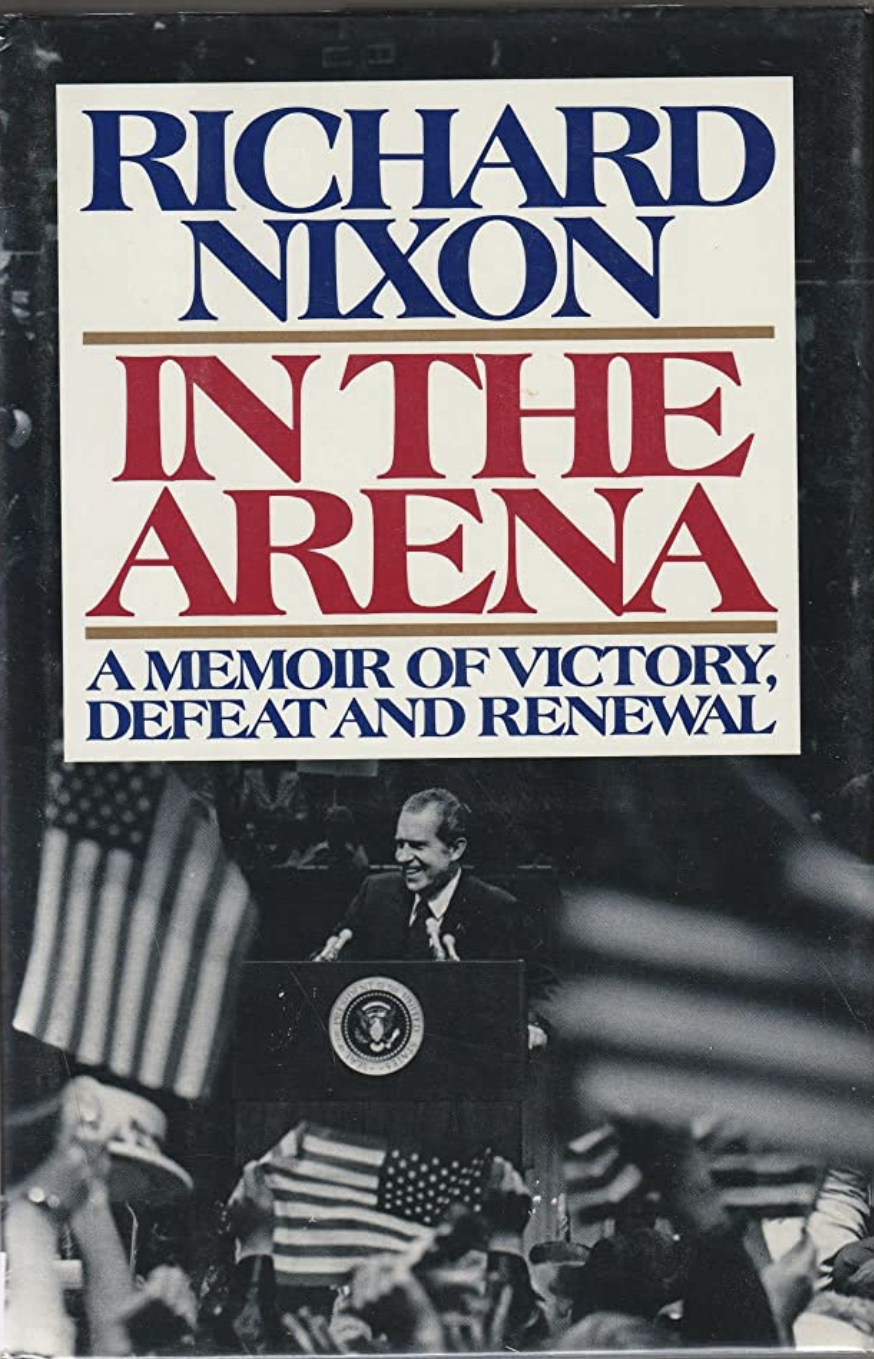
The Wisdom of A Disgraced Man


Reading Richard Nixon’s In The Arena, was an interesting experience for me. Growing up in Egypt and seeing Nixon come to Egypt in the early 1970’s and literally help Egypt out of the Soviet orbit made me like him. When Nixon resigned in August 1974, I was just 14; I didn’t know much about the cultural wars of the 1960’s, Watergate didn’t mean much to me, I only viewed Nixon from the eyes of an Egyptian boy. Today, in my sixties and having left Egypt a year after Nixon resigned and spent most of my life in the US, I’m on the opposite political spectrum of Nixon. While I continue to lean right on issues of Defence and some economic issues, I’m on the liberal left on some economic and most social issues. 

Still, I found these Nixon memoirs fascinating and moving in terms of his journey from the greatest heights to complete disgrace and his ability to build back a productive meaningful life after leaving the White House. There is plenty of regrets and contrition over his role in Watergate, but it’s mostly of the type I should have been firmer, there is some of the I never ordered, my predecessors did worse, I didn’t know and the media this and that. Once there was a clear cut acceptance of the blame of not having set the right moral tone. I felt some sympathy but I suspect it’s carryover from my boyhood admiration. 

After few early chapters on Watergate and some interesting history of his “wilderness” years, following loss to JFK in 1960 and loss of California governor race in 1962, the book is mainly made of short chapters on various fascinating topics ranging from his views on religion, to stories about his wife and parents, to stories about his rise in Congress, winning the Senate in 1950 and fascinating stories of his meetings with Mao and Li and later following Tienman Square with Deng Chao Peng. 

There is plenty of wisdom from Nixon’s life and those he admired the most like Churchill, DeGaul and others. I especially enjoyed some of his saying on various topics. These include: you may not lose what you have if you don’t risk, you certainly can’t win more without risk, small people seek office to make something out of themselves while great people seek office to achieve something and of course several sayings on failure and not defining oneself by failure.  Several of the sayings may come across as cliché, but from Richard Nixon, they came across as wisdom gained from an incredible lifetime of trials, successes, failures, or as he learnt from a friend life is made up of 99 chapters. 


Friday, May 26, 2023

مراجعة كتاب القراءة السريانية الآرامية للقرآن


 تصعب قراءة هذا  الكتاب الغريب على القارئ العادي وايضا على الباحث الأكاديمي وبينما يحاول الكتاب ان يظهر بصورة بحثية اكاديمية الا انه في الحقيقة  موجه إلى القارئ العادي . بالنسبة للقارئ العادي، فإنه يشعر بالإرهاق بسبب الإشارات المتعددة باللغات المختلفة والكتابات والهوامش الوافرة والحواشي. بالنسبة للأكاديميين، فإنه بعيد تماما عن المنهج العلمي،  يتجاوز نطاقه، ويفتقر إلى التركيز، ومليء بالآراء والتحيزات، وليس مقدمًا بطريقة تستحق وتتيح المراجعة النظيرية. استنتج أنه عبارة عن تجمع عشوائي للآراء يتم تقديمه على أنه اكاديمي وان الكتاب مصمم لإبهار وإرهاق القارئ العادي. الفرضية المحورية للكتاب هي أصول وتطور اللغة العربية أطروحة الكاتب ان اللغة العربية لم تكن مكتوبة وان لغة التواصل الاساسية كانت الارامية ما هي الا افتراض بعيد تماما عن العلم المثبت أو المتفق عليه من علماء اللغويات والتاريخ. هذه الأطروحة الضعيفة هي حجر الركن للكتاب ككل.

كريستوف لوكسنبرغ، الاسم المستعار الذي اختاره الكاتب لنفسه، يطرح افتراضاً بدون استناد أن المخطوطات المبكرة للقرآن كتبت بالكتابة السريانية الآرامية. بُني هذا الافتراض، بطبيعة الحال، على أطروحات الكاتب عن اللغة العربية ومن هذه الافتراضات انتقل الكاتب الى اكتشافاته و تفسيراته للقرآن. لا يوجد دعم لهذه الافتراضات بواسطة المخطوطات أو الأدلة الأثرية أو التاريخية. الأطروحة الحاسمة او المركزية التي يقدمها الكتاب هي أن القرآن لم يكن يقصد به أن يكون "كتابًا مقدسًا"، بل إنه مجموعة تواشيح او اناشيد طقوسية “مسيحية” للقراءة الجماعية. يدعم الكاتب هذه الفرضية بتحليل لغوي للكلمة العربية "قرآن" وعلاقتها بكلمات الآرامية السريانية وكيف أنه تم الخلط بين الصوت "يا" في الآرامية عند كتابة العربية بالصوت "أه". قفز الكاتب الى استنتاج عجيب كحقيقة مثبته بعد مراجعة سطحية لبعض الحجج الأخرى المماثلة. اختار الكاتب عدم التطرق إلى العديد من الاختلافات في السرد بين القرآن من جهة وما يشير إليه الكاتب بأنها الكتب المقدسة  (الإنجيل العبري والعهد الجديد). اختار الكاتب ببساطة تجاهل جميع الإشارات في القرآن إلى إنسانية يسوع وإصرار القرآن على أن يسوع ليس إلهًا وأقنع نفسه بأنه هو المكتشف الأغر الذي يقوم بإصلاح المفاهيم المغلوطة منذ قرون.

يقدم الكاتب تحليلًا أكثر تأنًا ومصداقية لبعض الكلمات المستخدمة في القرآن ويقترح تفسيرات سريانية آرامية لها مثل "الرقيم"، "قسورة"، "عتل"، "زنيم". يعتبر تحليل النقاط أو النقاط على الحروف والروابط الممكنة بالآرامية في المخطوطات المبكرة أمرًا مثيرًا للاهتمام ولكنه بالطبع يحتاج الى المراجعة التاريخية النقدية بطرق أكاديمية علمية..

نصل الى أكثر نظريات الكاتب في العبث والتسلط على النصوص في تفسيره للكلمة العربية "يسر" و"يسرنا"، حيث يفرض قرائه سريانية ارامية على المعنى العربي الواضح المباشر للتسهيل والتيسير ويصر على أنها تعني "ترجمة". يستمر الكاتب ثم في اقتراح تفسيرات تقول أن. احتجت الى قدر عالي من الاصرار على تكملة قراءة الكتاب بعد هذه الفقرة العبثية الضعيفة.

ينسب الكاتب أجزاء من سورة مريم، تحديدًا الآية 19:24، إلى إنجيل مزيف غير قانوني يسمى إنجيل متى المنحول. يعود تاريخ هذا  الإنجيل إلى حوالي 800 ميلادية، لذا يصعب ادعاء إن هذا الانجيل المزيف كان مؤثرًا في منطقة مكة قبل صدوره  بحوالي 160-190 عامًا. لم يقدم الكاتب أي دليل على الصلة، ومع ذلك، تابع تقديم تفسيرات إضافية لسورة 19 استنادًا إلى افتراضاته غير المستندة وغير المدعومة. بطبيعة الحال اي مراجعة اكاديمية جادة ستجعل مثل هذه الافتراضات اضحوكة.

يتجاوز الكاتب تخصصه المعلن في اللغة السريانية الآرامية، ويقترح تصحيحات لكلمات عربية لم يربطها بأصول آرامية سريانية في فصل قصير بعنوان "تعبيرات عربية مسروقة". على الرغم من أنه يقدم حججًا مثيرة للاهتمام استنادًا إلى منطقه بشأن "تصحيحاته" لوضع النقاط في سورة 17:64، إلا أن نهجه يشير إلى ضعف منهجية البحث. يبدو أن الشروط المطلوبة لتغيير النصوص القرآنية هي فقط هوى الكاتب وآرائه الخاصة.

قال الكاتب بالنص في الفصل 15: "الآن بعد أن أصبح واضحًا من تحليل العينات الفردية للغة القرآن أن النص القرآني قد تم قراءته وتفسيره جزئيًا بشكل خاطئ من قبل العلماء العرب والمفسرين، فلن يكون من المستغرب أن تكون الآن مفاهيم عميقة في التقاليد الإسلامية، بل المحتويات الدينية، قد تم استندت جزئيًا إلى نص القرآن المساوم بالتسمية". تكشف هذه الجملة الغريبة عن منهج تعارضي بنية الهجوم على  الإسلام متنكرًا في دراسة علمية نقدية للغة القرآن

يتناول الكاتب موضوع العذارى في الجنة، المعروفة بـ "حور العين"، ويقدم مناقشة مثيرة وشيقة وتبدو انها كانت بحث أو مقالة منفصلة تم دمجها في الكتاب. يبدو أن نهجه في هذا الجزء أكثر اعتدالًا وأقل انحيازًا وأكثر جاذبية. قدم الكاتب تفسير استند فيه الى اللغة السريانية الآرامية ان حور العين في الجنة تعني العنب الابيض وان فهم العذارى كان نتيجة قراءة خاطئة للنصوص القرآنية الأصلية.

وفي الختام، قدم الكاتب تحليلًا مفصلاً لسورتين قصيرتين، هما السورة 96 والسورة 108، وقدم حججًا مقنعة لاحتمال وجذور سريانية آرامية وتفسيرات معقولة. ثم، وبدون أدلة، قدم بشكل سخيف الرسالة الأولى لبطرس كمصدر لسورة 108 واقترح خطأ أن النص يستند إلى دعوة للمشاركة في القربان المسيحي وتناول الأوشية. لم يقدم الكاتب أي دليل على أهمية رسالة بطرس الأولى في تاريخ المسيحية السريانية من حيث عدد المخطوطات السريانية أو أي دلالة أخرى على التأثير. تم تقديم الصلة المزعومة بالقربان بدون أي دعم على الإطلاق.

من المؤكد أن العقود القادمة ستشهد زيادة في عدد الدراسات التاريخية النقدية الغربية لنص القرآن وأساسيات التاريخ الإسلامي. ينتمي العمل في هذا الكتاب لمدرسة الاستشراق بكل ما يحمله التعبير من سلبيات تجاة العرب بشكل عام والإسلام بشكل خاص، وبالاضافة هو عمل ركيك وضعيف بعيد عن المناهج العلمية في الدراسات النقدية التاريخية. هذا الكتاب ما هو الا تعبير عن آراء غير مستندة لشخص واحد، يتم تقديمها كانها  دراسة علمية وهي ابعد ماتكون عن هذا. 

Tuesday, May 23, 2023

From Jesus to Christ - by Paula Fredriksen - Book Review

This is very dense book, but it is absolutely brilliant. Fredriksen's writing style requires a high level of reader focus, indeed full attention and concentration;  I often found myself having to read some paragraphs several times, but it’s certainly worth in terms of insight. 

Fredriksen argues that the Apostle Paul viewed faith in Jesus as an alternate path for Gentiles to salvation, unlike many historians who argue that Paul viewed, what would become, Christianity, as a successor to Judaism, Fredriksen argues that Paul's faith in the Jewish Covenant was unshaken. Paul didn't believe that Gentiles were required to adhere to the Covenant to attain salvation, but Jews had to. The lashing punishments Paul received in various synagogues were an evidence of his desire to remain Jewish and not to be expelled from synagogues. 

Fredriksen also argues that Jesus was likely a Pharisee, she marshalled several points to evidence this, including Jesus's sayings on "house of prayers" suggesting that Sadducees who controlled the Jewish priestly classes and the Temple advocated animal sacrifice which the Pharisees later opposed. She suggested that the earlier gospels showed the scribes and priests opposing Jesus whereas the later gospels singles out Pharisees for blame. As only Pharisaic Judaism survived the Jewish War and the destruction of Jerusalem 70 CE, they were the one remaining Jewish voice, worshipping the same God, but not accepting Jesus as the Christ or Messiah. On this one point, I found Fredriksen less persuasive than  other historians who suggested closer alignment between Jesus's movement and the  Essenes or the Jews of the Dead Sea Scrolls who advocated communal ownership, celibacy and were vehemently opposed to the Pharisees and their non literal interpretations of the Bible. 

Fredriksen examined three questions closely and how the Apostle Paul and the four gospels dealt with them. First the issue of the end the ages and the arrival of God's Kingdom, second was why most Jews rejected Jesus and how his message received traction with the “God fearer” Gentiles and lastly is the issue of differences amongst the followers of Jesus. Fredriksen showed the changing narratives on all three areas from the earliest teachings of Paul on to Mark immediately after the Jewish War on to Matthew and Luke, almost two generations after Paul and then on to John at the end of the First Century. Fredriksen's analysis of the four gospels, taking the reader to their time and the surrounding challenges was fascinating and demonstrated how and why stories changed over time. 

There is a lot more there and I will certainly read again! 

Tuesday, January 10, 2023

Book Review: The Syrio Aramiac Reading of the Quran by Christoph Luxenberg

This odd book is neither accessible nor academic, it does not appear to be addressed to the ordinary reader, nor to the scientific academic community. For an ordinary reader it’s overwhelming with extensive multilingual references, scripts and footnotes. For academics it’s overreaching in scope, lacking in focus, full of opinions and not presented in a manner that lends itself to peer review. I conclude it’s a hodgepodge of opinions presented as science and designed to impress and overwhelm ordinary readers. The central hypothesis of the book, the origins and development of the Arabic language is far from proven, agreed upon or established science.

Christoph Luxenberg, the name the author wrote under, presents an unfounded assumption that the early Quran manuscripts were written in Syrio Aramaic script. This central assumption drives much of the work of the book. Yet, this assumption can’t be supported by manuscripts, archaeological or historical evidence. A critical thesis presented in the book is that the Quran was never meant to be a “scripture”, rather it’s a liturgical poems for communal recitations. The Author supports this hypothesis with linguistic analysis of the Arabic word Quran and its relation to Syriac Aramaic words and how the sound “ya” in Aramaic was confused when writing Arabic with the sound “ah”. Few other similar minor arguments led the author to jump to this conclusion as an established fact. The author chose not to address numerous differences of narratives between the Quran on one side and what the Author references as Scripture, namely the Hebrew Bible and the New Testament. The Author simply chose to ignore all references in the Quran to the humanity of Jesus and the Quran’s insistence that Jesus is not divine and simply convinced himself that he, the Author, is single handedly dismantling the myth of the divinity and is correcting centuries old misunderstandings of it.

The Author puts forward more thoughtful analysis into various words used in the Quran and proposes Syrio Aramaic explanations for them such as الرقيم, قسورة، عتل، زنيم. The analysis of the points or dots on the letters and the possible connections to Aramaic in the early manuscripts is interesting but clearly needs to be subjected to historical critical peer review.

One of the author most far fetched or rather more outlandish theories comes in his interpretation of the Arabic word يسر and يسرنا where the author imposes a Syrio Aramaic reading on this straight forward Arabic meaning of to easing or make easier and insists that it means “translate”. The author then proceeds to suggest interpretations that the Quran itself states that it was translated.

The Author attributed parts of the Sura of Mary, specifically Quran 19:24 to the non canonical Gospel of Pseudo Matthew.  Historians date Pseudo Matthew to around 800 AD/CE, it is therefore hard to argue that it was influential in the Mecca region nearly 160-190 years earlier. The author presented no evidence of a connection, yet proceeded to offer further interpretations to Sura 19 based on his unfounded and unsupported assumptions.

Moving beyond his stated specialty in Syrio Aramaic language, the Author proposed corrections for Arabic words that he didn’t attribute to Syrio Aramaic origins in a short chapter titled "Misread Arabic Expressions". While he offered  interesting arguments based on his logic for his “corrections” of the placement of the dots for Sura 17:64, his approach indicated a weak methodology of research. The threshold or the substantiation for altering texts whose immediate intent may have not been clear appears to become the Author’s opinion.

The Author then proceeded to state in Chapter 15: “Now that it has become clear from the preceding analysis of individual samples of the language of the Koran that already in normal linguistic usage the Koran text has been in part so misread and misinterpreted by Arabic philologists and exegetes, it will no longer be surprising it meanwhile deeply anchored notions in the Islamic tradition, indeed religious contents, have been partially based on equally misunderstood Koran text.” This one unwieldy sentence betrays an approach of antagonism towards Islam disguised as scientific critical study of the language of the Quran.

On the topic of the so-called Virgins of Paradise or حور العين , the Author offered a fascinating discussion, in what appeared as a standalone paper or essay that was incorporated in the book. His approach to this particular part appeared  more restrained,  less opinionated and more engaging. He concluded that the concept of virgins of paradise was a misreading of the original Quranic texts.

The author concluded with detailed analysis of two short Suras 96 & 108 offering cogent arguments to possible Syrio Aramaic roots and reasoned interpretations. The author then, lacking substantiation, absurdly, offered the First Epistle of Peter as a root for Sura 108 and suggested erroneously that the text is rooted in an invitation to partake in a Christian Communion and to receive a Eucharist. The Author’s failed to offer any evidence of the First Peter being particularly important in the Syriac Christian history in terms of number of Syriac manuscripts or other indication of influence. The alleged connection to Eucharist was presented with no support whatsoever.

The coming decades will no doubt present the Muslim world with an increasing number of western historical critical studies of the text of the Quran and fundamentals of Islamic history. The work in this book sadly belongs to the category of orientalist islamophobia, and is not serious scientific work. This book is essentially an expression of the unfounded opinions of one man that, presented with the ornaments of a scientific study, but is certainly not that. This work does the field of historical critical study of Islam a great disservice. 

Ayman S. Ashour


Tuesday, January 25, 2022

Gun Island - Book Review


Adventures of a Quiet Man 

Amitav Ghosh is my favorite writer. This book was another Ghosh magical journey deep inside the fragility and humanity of an ordinary and lonely Bengali Indian American. Ghosh beautifully brings Bengali geography, rivers, smells, colors and storms with various rural and city people of differing classes with the changing environment, pollution, wild life … all come together with a host of interesting characters.


Gun Island reminded me a lot of Ghosh’s non fiction 
In An Antique Land when chapters alternated between Ghosh’s present day experience in Egypt with the history of a Jewish trader who left Egypt to settle in India. In this case, the contemporary Indian American is attempting to decipher the mysteries of the story of a Jewish sea Capitan trader with his Indian freed slave across multiple continents.


Ghosh added to all of this a whole other layer which is that of the refugees, the migrants, who escape various third world countries for the better life and opportunities in Europe. As usual Ghosh paints vivid images of the horrific journeys across borders into Europe via Turkey or Egypt.

A couple of minor details irked me a bit. Ghosh employed some supernatural devices, while he did so with restraint, I felt they detracted from the novel. The other issue which bothered me more was most female characters, particularly Cinta, the Italian professor and main patron of the main character. Cinta came across too perfect, too saintly, the consistent powerful savior. Cinta was too cardboard like to be a Ghosh character.

Overall, loved it and highly recommend it!

Tuesday, August 03, 2021

Motherland Lost - Book Review


Samuel Tadros did a superb job researching and presenting Egypt’s history from a Coptic perspective. The scope of Tadros’s coverage of the developments inside the Coptic Church was particularly enlightening. Some of the most impressive parts of this work are Tadros’s challenges to conventional wisdom: Tadros views of the inherent problems with Egyptian liberalism being fundamentally anti democratic, Egyptian liberalism that arose out of infatuation with Europe and West but turned mostly anti western. “Foreign intervention in the internal affairs of the country coincided with the birth of the constitutional movement in Egypt which would have profound effects on its future development. It would ultimately lead to love-hate relationship with the West as a source of inspiration and a model of modernity and, at the same time, the hated occupier. Egyptian liberalism would never escape this dichotomy” Tadros challenges the notion that the so-called Egypt’s “Liberal Age” was truly liberal or that it was “good” for the Copts. 

The following paragraph summarized an important thesis offered by Tadros: “The specifically Egyptian crisis of modernity, understood as a question of the compatibility of Islam with modernity, has resulted in the development of various state and intellectual approaches that have shaped the way Copts were viewed and led to their banishment from the public sphere as a community, though not as individuals. The failure of liberalism in Egypt did not result in the Copts’ current predicament. Rather, it was the very approach that liberalism took that brought about this predicament.” While I personally would have substituted the word “Islam” with “religions”, I think Tadros was clearly on to an important concept. 

Tadros cleverly captures an important trend from the Mohamed Aly era: “Egyptian liberals’ ultimate dream would be a repetition of the story of Mohamed Aly, an autocrat imposing reforms from above on a reluctant population”. 

While I highly recommend this work and rate it very highly, I have a number of criticisms for it which I will now address. 

Devotional v. historical critical study: Tadros presented much of the Coptic tradition as historical facts, starting from the story of St. Mark and his alleged role in establishing Christianity in Egypt. Modern Western studies generally challenge this view. Tadros’s admiration of St. Athanasius clearly arises out of deeply held beliefs or acceptance of the Coptic traditions, yet the vast majority of historical critical studies show Athanasius to be have been a manipulative political operator. While these aspects don’t affect the core thesis of this great work, they do detract from it. 

Apologia?: With so much discrimination against Copts over centuries of subjugation, it is refreshing to read a passionately pro Coptic work, however Tadros has a times fallen into what I’d term the genre of apologia of all things Coptic. The impassioned defense and glorification of General Yacoub who sided with French invaders along with the harsh attack against the Egyptian Conference of 1911 are examples. Labeling the Egyptian Conference of 1911 as Islamist was particularly grating and misleading. While Tadros lister the point by point demands of the preceding Coptic Conference, he failed to do the same for the Egyptian Conference, yet a simple review of these would show that Egyptian Conference adopted views that even by 21st century standards would be seen as progressive and egalitarian. 

Opinions v. Facts: Tadros presented several important ideas in the book as established facts, while in fact these often appear at best opinions or unproven theories. Lord Cromer, who was a founding member of the Society Against Women Suffrage in England was being portrayed by Tadros as a progressive liberal, with “compassion” for poor Egyptian peasants. Ahmed Lutfy El Sayed was presented by Tadros as an anti Copt agitator. Tadros failed to present sufficient facts to prove this, nor did he offer a balanced discussion that supports his conclusions. The demonization of Lutfi El Sayed was relentless, and frankly shocking. Tadros attempt at nuance when analyzing Lutfi El Sayed was limited to admitting that he and his colleagues were not “fanatics”! 

Similar but less obvious was Tadros’s dismissal of Ahmed Maher as the King’s lackey, yet at some point Tadros admitted that the King was actively trying to appeal to the Copts to counter the popularity of the Wafed Party. In the post 1952 era, Tadros suggested that Nasser came into power with an Arabist and anti Israel agenda, this doesn’t stand up to scrutiny as Nasser hardly addressed either topic in his first few years. It was also ironic that Tadros blamed Nasser for the Coptic Church’s rejection of Vatican II. Tadros seemed to want to whitewash the deeply ingrained antisemitism in the Coptic traditions and history and shift the blame on to Nasser. 

Dhimmitude and 21st Century sensibilities: It was unclear which era Tadros considered was the best for Copts in Egypt other than perhaps the brief 3 year period of the French occupation at the end of the 18th & beginning of the 19th century.  Mohamed Aly and his dynasty according to Tadros were focused on their own struggles against the Turks and the Ottoman Empire and / or against the British. The British according to Tadros had no interest advancing the rights of Copts, the Liberal Egyptian movement of the first half of the 20th century didn’t either. At times it appeared that Tadros thought Copts faired best under the more traditional so called dhimi times, when according to Tadros Copts played an important role in the civil service. Tadros quoted some blatantly discriminatory and aggressive anti Copt language from a newspaper in 1908 responding to an attack from a Coptic paper on Islamic history, yet Tadros did not provide context for such language, nor did he offer any details on what the Coptic newspaper actually printed to start the episode. Contrasting some of this language with the language used by Cairo’s Rabbinical Jewish religious authorities describing Karaite Jews in 1903 "impure bastards" would show the very different sensibilities of the time. It would have been more helpful for the reader if Tadros offered more context or comparisons of the how the various minorities and sects dealt with one another at the various eras of history. 

As referenced earlier, the weaknesses and shortcomings of this work should not take away from its importance. The passion of Samuel Tadros for his church and his fellow Copts made him an outstanding advocate, but readers would definitely benefit from a more scientific approach in assessing and addressing both history and present. The challenges Egyptian Copts face are huge: discrimination, acts of violence, governments that are often complicit in discrimination or at best tolerant of it, brain drain, conflicts within the Church between reformers and traditionalists … these and more are very serious challenges and need to be addressed in an even handed fashion. 

Sunday, June 06, 2021

Why I Left The Most Successful Clubhouse Room

Dialogue has been my chosen form of activism for a long time. Soon after I joined  Clubhouse in early 2021. The live voice aspects of Clubhouse made it ideal, but the nature of people drifting in and out of rooms has also made it a tougher medium to navigate, after a few difficult sessions, I found my bearings. 


Then Sheikh Jarrah happened and shortly after a full on war started. Palestinian and Israeli friends asked me to help co-moderate Meet Palestinians & Israelis room, I did! The room kept going round the clock for over two weeks and broke records in terms of number of unique listeners and average numbers of hours spent. The room lasted for over two weeks, but I left it on day 8. Leaving a dialogue effort that I helped build was not an easy decision and I’m not sure it was the right decision, but I will share below the factors that led me to part ways with the room. 


1. Public Diplomacy: few days into the room, a new theme emerged by some of the comoderators advocating that the room is acting as a platform for public diplomacy. I view dialogue to be distinct from negotiations and diplomacy. The only purpose for dialogue is hearing the other and getting the other to hear you. Dialogue may not have any other purpose. Moreover, the history of the Palestinian struggle in particular is dominated by the issue who has the right to negotiate in the name of the Palestinians. The label of public diplomacy would act as way to stifle dialogue. 

2. There was pressure to ask people to have a picture and reveal their identity through social media profiles. I rejected this approach and never followed it whenever I moderated. I found it biased against people who disapprove of using photos on religious grounds, or people who fear identifying their locations and identities for whatever reason. I viewed this as an effort to silence pro Palestinian voices. 

3. There were attempts to challenge the identity of a Palestinian doctor speaking from Gaza. I hosted the very same young doctor, while I disagreed with some of the points he made, I had no reason at all to doubt his identity. I saw no effort to verify the identities of others who gave their own personal stories. Again I disapproved of the uneven handling. 

4. While I don’t claim to know all there’s to know about the history of the conflict, I have spent many years reading and researching the various aspects of the conflict. I have accumulated a degree of knowledge of the competing narratives. This has equipped me as a moderator to push back on extremist discourse and to center the discussions on true dialogue rather than what I see as propaganda. The straw that broke the camel back and made me decide to leave was what I felt were attempts to silence me, by different means. 


I don’t want the above to detract from my support and admiration for the whole effort. And I understood then and understand now that as the guns were silenced the war continued on using the tools of propaganda. I’m happy that my friends who started the effort originally were eventually successful in wresting back control of the project. 


Ultimately dialogue is about talking to and listening to the other, to the enemy, to a side that hold radically different views. Dialogue is about promoting understanding of the other, not agreement with other. Is it useful? I think it is but I accept that many others refuse it. 


Ayman S. Ashour 


Saturday, June 05, 2021

June 5, 1967 My Zero Hour

 My memory recedes with the passing of the years. I have few memories before June 5, 1967. I have very vague memories of the day of the move to Ma`adi in 1964; another memory of huddling up in my parents’ room listening in total silence to Oum Kalthoum sing Inta Omry for the first time, as my father had a microphone in front of small transistor radio connected to a reels recorder. I remember sitting with my grandmother on a sofa hand feeding chicks and then remember being at the family cemetery where she was buried in 1966. Other than these tidbits, I remember nothing, but then I have vivid memories starting from the 1967 war.


I remember the euphoria of impending victory over Israel and the patriotic songs on the morning of the 5th of June.  I remember the civil defense volunteers and the shouts of “taffi ennour” to turn off the lights. I remember having all the windows covered with blue paper and tape. I remember the sonic booms, the sound of distant explosions and the sounds of the anti aircraft guns.


We lived on the very edge of Cairo, immediately behind our house, literally adjacent was a military camp with anti aircraft guns. I was later told that those were so old, dating to WWII. On the 3rd or 4th day of the war an Israeli plane flew so low over our house, I was on a second floor balcony, I still remember how close it was. 


I can’t remember exactly when it became clear that we, Egypt, lost the war, but I remember sitting in the dark watching president Nasser’s speech and my late brother shouting back at the TV, no you can’t resign now. I remember loud terrifying sounds of sonic booms and the heavy thud of bombing immediately after the end of the speech. 


June 5, 1967 was the beginning of forming who I was. I remember the various events that ensued from the suicide of of the minister of defense, to the downing of an Egyptian civilian jet coming back from Libya by the Israelis, the plane had on it the mother of one of the kids in the area. 


The War of Attrition that followed the original war, lasted for over two years, lots of sonic booms over Cairo, fear of Israelis exploding bridges over the Nile. An elementary school had some 248 children killed in the delta, got me convinced that Israel could target us. Whenever we heard the air raid sirens or sonic booms, it was sheer terror. I was more frightened of being targeted at the school than at home, adjacent to the military camp. Only few years ago, I read that Israel apologized for the bombing of the elementary school as a mistake, no one told me then.


These events, a very long time ago, still have a profound effect on who I’m today. Yet, I was extremely lucky, I was far away from any actual bombing, I didn’t see any rubble,no blood. I think of the people of Gaza, the children, people young and old, who seem to live through real and immediate hell and I can only imagine the lifelong effect.


This morning, I was reading an account of the Palestine Riots of 1921, some 200 people died, those were perhaps some of the earliest deaths post the Balfour Declaration. A full 100 years later and sadly, it doesn’t not seem like the wars and the killings will stop anytime soon.


Ayman S. Ashour