Saturday, March 07, 2026
The Making and Unraveling of the American–Israeli Alliance
Suspicion, Integration, and Postwar Transformation
The history of Jews in the United States stretches back to the seventeenth century. Yet for much of that history, Jews were viewed with suspicion and faced various forms of discrimination. Antisemitic organizations operated openly, and social exclusion remained common well into the twentieth century.
The turning point came after World War II, which ended in 1945. Antisemitism became discredited by its association with the Nazi enemy. At the same time, Jewish participation in the U.S. armed forces brought millions of American soldiers into direct contact with Jewish fellow citizens, replacing inherited prejudice with personal familiarity. In the decades that followed, Jews became increasingly visible in American public life — culturally, academically, and politically — expressing their identity more openly than had been possible before the war.
In the 1950s and 1960s, Jewish participation was highly visible in the civil rights movement and in efforts to dismantle racial segregation. While that visibility came at a cost, as Jewish activists were targeted by white supremacists in the American South, involvement in the struggle against racism continued. Jewish voices were also prominent in opposition to the Vietnam War, to the point that U.S. President at the time, Lyndon Johnson, reportedly expressed frustration with what he perceived as strong Jewish opposition, contrasting it with support for Israel.
By the mid-1960s, American Jews were largely integrated into the fabric of American society. Yet integration alone did not automatically translate into a deep strategic bond between Washington and Jerusalem. Israel was not regarded as a close ally under either the Eisenhower or the Kennedy administrations, as both were suspicious of the former Prime Minister of Israel, Ben-Gurion, and generally maintained a cool posture toward Israel.
1967: The Strategic and Emotional Turning Point
The Six-Day War in 1967 between Israel and a coalition of Arab countries, primarily Egypt, Syria, and Jordan, marked a decisive turning point.
At a moment when the United States was mired in Vietnam and facing expanding Soviet influence in Europe and the Middle East, Israel defeated Soviet-backed Arab armies in just six days. The speed and scale of that victory reshaped perceptions in Washington. Israel was no longer viewed primarily as a vulnerable state seeking protection, but as a capable regional power that had effectively rolled back Soviet influence in the Middle East.
At the same time, 1967 transformed the emotional landscape of American Jewry. For many American Jews, the war produced a new sense of affinity and belonging to Israel. What had previously been a distant state became central to communal identity. This shift strengthened political support and deepened the sense that Israel’s fate and American Jewish identity were interconnected.
Geopolitical alignment and communal identification now reinforced one another. The alliance was anchored not only in strategic calculation, but in a broad American perception of shared interests and shared values.
Fractures Within and Beyond the Jewish Community
We are now witnessing the beginning of an erosion of this alliance. The war crimes committed by Israel in Gaza and Lebanon over the past two decades have fractured the American perception of shared culture and shared principles. The assumption of automatic moral alignment has weakened.
This fracture first became visible within parts of the American Jewish community, particularly among younger Jews, where identification with Israel is no longer as instinctive or unquestioned as it once was. From there, it has extended, and continues to extend, into broader American society, especially among younger voters.
From National Consensus to Political Polarization
On the surface, with the US and Israel waging a joint war against Iran, the alliance appears strong, but in the current war with Iran, Israel is increasingly seen as dragging the United States into conflicts that are not its own, wars that serve the interests of Israel and its hardline government. Polls indicate that only 25 percent of Americans supported the war in its early days.
In the minds of many Americans, this war has become closely associated with two political figures: Benjamin Netanyahu and Donald Trump. Both are deeply polarizing figures, particularly among younger voters, who have faced, and in different ways continue to face, corruption allegations or legal scrutiny. That association shapes how Israel itself is perceived by the people of its top supporter.
Netanyahu’s efforts to weaken judicial constraints within Israel, his reliance on far-right coalition partners, and the racist tone adopted by some members of his government sit uneasily with the democratic image that once underpinned the American–Israeli alliance. For liberal American Jews, whose communal memory includes fighting segregation, racism, and authoritarian tendencies in the 1950s and 1960s, this alignment is especially jarring.
The Narrowing Base: Christian Zionism
Perhaps the clearest sign of the weakening American–Israeli alliance is the growing reliance of parts of the American political system on Christian Zionist support. This represents a narrowing of the alliance’s base.
Christian Zionism is rooted in a literalist reading of the Bible and an apocalyptic understanding of history. At its theological core, it is not a pro-Jewish doctrine but a framework in which Jewish sovereignty serves a Christian eschatological narrative. The ultimate horizon of that narrative is not Jewish continuity, but conversion or destruction. Its support for Israel is therefore instrumental, embedded in a prophecy-driven vision of the end of days.
The Alliance’s Foundation Has Eroded
The American–Israeli alliance was strongest when it rested on two pillars: broad American public support and affinity for Israel on the one hand, and the perception that the alliance served U.S. interests and advanced American goals on the other. Today, we may be witnessing a rapid unraveling of that foundation. Israel is no longer viewed as positively in the United States as it once was. The destruction of Gaza has left many Americans either opposed to Israel or ambivalent toward it. The war with Iran is widely seen as not clearly advancing core U.S. interests.
The two pillars that have supported the alliance since 1967 have begun to crack. Alliances endure when they command wide civic legitimacy; they weaken when they become tied to polarizing leaders, partisan identity, or narrowing ideological bases. What was made through the convergence of perception and interest may now be coming undone through misalignment.
(this article first appeared on EgyptianStreets.
Sunday, June 06, 2021
Why I Left The Most Successful Clubhouse Room
Dialogue has been my chosen form of activism for a long time. Soon after I joined Clubhouse in early 2021. The live voice aspects of Clubhouse made it ideal, but the nature of people drifting in and out of rooms has also made it a tougher medium to navigate, after a few difficult sessions, I found my bearings.
Then Sheikh Jarrah happened and shortly after a full on war started. Palestinian and Israeli friends asked me to help co-moderate Meet Palestinians & Israelis room, I did! The room kept going round the clock for over two weeks and broke records in terms of number of unique listeners and average numbers of hours spent. The room lasted for over two weeks, but I left it on day 8. Leaving a dialogue effort that I helped build was not an easy decision and I’m not sure it was the right decision, but I will share below the factors that led me to part ways with the room.
1. Public Diplomacy: few days into the room, a new theme emerged by some of the comoderators advocating that the room is acting as a platform for public diplomacy. I view dialogue to be distinct from negotiations and diplomacy. The only purpose for dialogue is hearing the other and getting the other to hear you. Dialogue may not have any other purpose. Moreover, the history of the Palestinian struggle in particular is dominated by the issue who has the right to negotiate in the name of the Palestinians. The label of public diplomacy would act as way to stifle dialogue.
2. There was pressure to ask people to have a picture and reveal their identity through social media profiles. I rejected this approach and never followed it whenever I moderated. I found it biased against people who disapprove of using photos on religious grounds, or people who fear identifying their locations and identities for whatever reason. I viewed this as an effort to silence pro Palestinian voices.
3. There were attempts to challenge the identity of a Palestinian doctor speaking from Gaza. I hosted the very same young doctor, while I disagreed with some of the points he made, I had no reason at all to doubt his identity. I saw no effort to verify the identities of others who gave their own personal stories. Again I disapproved of the uneven handling.
4. While I don’t claim to know all there’s to know about the history of the conflict, I have spent many years reading and researching the various aspects of the conflict. I have accumulated a degree of knowledge of the competing narratives. This has equipped me as a moderator to push back on extremist discourse and to center the discussions on true dialogue rather than what I see as propaganda. The straw that broke the camel back and made me decide to leave was what I felt were attempts to silence me, by different means.
I don’t want the above to detract from my support and admiration for the whole effort. And I understood then and understand now that as the guns were silenced the war continued on using the tools of propaganda. I’m happy that my friends who started the effort originally were eventually successful in wresting back control of the project.
Ultimately dialogue is about talking to and listening to the other, to the enemy, to a side that hold radically different views. Dialogue is about promoting understanding of the other, not agreement with other. Is it useful? I think it is but I accept that many others refuse it.
Ayman S. Ashour
Saturday, June 05, 2021
June 5, 1967 My Zero Hour
My memory recedes with the passing of the years. I have few memories before June 5, 1967. I have very vague memories of the day of the move to Ma`adi in 1964; another memory of huddling up in my parents’ room listening in total silence to Oum Kalthoum sing Inta Omry for the first time, as my father had a microphone in front of small transistor radio connected to a reels recorder. I remember sitting with my grandmother on a sofa hand feeding chicks and then remember being at the family cemetery where she was buried in 1966. Other than these tidbits, I remember nothing, but then I have vivid memories starting from the 1967 war.
I remember the euphoria of impending victory over Israel and the patriotic songs on the morning of the 5th of June. I remember the civil defense volunteers and the shouts of “taffi ennour” to turn off the lights. I remember having all the windows covered with blue paper and tape. I remember the sonic booms, the sound of distant explosions and the sounds of the anti aircraft guns.
We lived on the very edge of Cairo, immediately behind our house, literally adjacent was a military camp with anti aircraft guns. I was later told that those were so old, dating to WWII. On the 3rd or 4th day of the war an Israeli plane flew so low over our house, I was on a second floor balcony, I still remember how close it was.
I can’t remember exactly when it became clear that we, Egypt, lost the war, but I remember sitting in the dark watching president Nasser’s speech and my late brother shouting back at the TV, no you can’t resign now. I remember loud terrifying sounds of sonic booms and the heavy thud of bombing immediately after the end of the speech.
June 5, 1967 was the beginning of forming who I was. I remember the various events that ensued from the suicide of of the minister of defense, to the downing of an Egyptian civilian jet coming back from Libya by the Israelis, the plane had on it the mother of one of the kids in the area.
The War of Attrition that followed the original war, lasted for over two years, lots of sonic booms over Cairo, fear of Israelis exploding bridges over the Nile. An elementary school had some 248 children killed in the delta, got me convinced that Israel could target us. Whenever we heard the air raid sirens or sonic booms, it was sheer terror. I was more frightened of being targeted at the school than at home, adjacent to the military camp. Only few years ago, I read that Israel apologized for the bombing of the elementary school as a mistake, no one told me then.
These events, a very long time ago, still have a profound effect on who I’m today. Yet, I was extremely lucky, I was far away from any actual bombing, I didn’t see any rubble,no blood. I think of the people of Gaza, the children, people young and old, who seem to live through real and immediate hell and I can only imagine the lifelong effect.
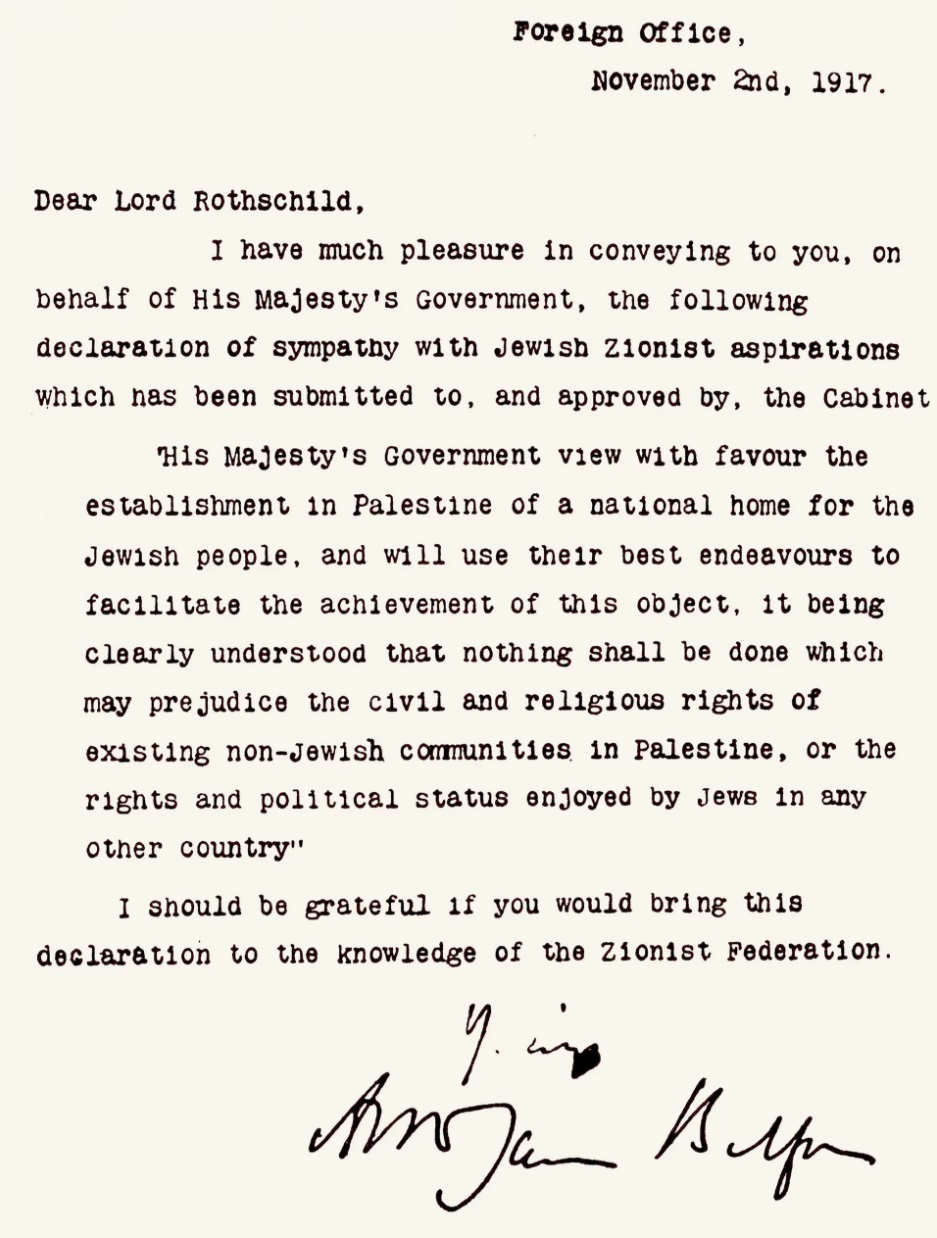
This morning, I was reading an account of the Palestine Riots of 1921, some 200 people died, those were perhaps some of the earliest deaths post the Balfour Declaration. A full 100 years later and sadly, it doesn’t not seem like the wars and the killings will stop anytime soon.
Ayman S. Ashour
Tuesday, May 25, 2021
Pax Bibi, What's Next?
The Palestinian people have also succeeded in showing the world that they have moved past the Hamas and PA jostling. The refusal to submit to Pax Bibi was the response from virtually all parts of the Palestinian society, across borders, across religious beliefs and political ideologies. The resistance that resonated with the world was that carried out in dignity and defiance of the ordinary unarmed Palestinians. The Israeli propaganda tried to keep the discourse focused on Hamas, this worked with governments and traditional media. Global public opinion shifted decisively and the “both sides-ism” whitewash language has been replaced with a clearer understanding of the immorality and cruelty of the discriminatory policies of Israel.
This time, the world saw the zealots of the Israeli settler movement like never before. While the Governments were declaring that All Lives Matter, public opinion was shouting Palestinian Lives Matter! Not because all lives don’t matter but because thus far it was only the Palestinian lives that didn’t matter or mattered a lot less. Palestinian activists walked back on the use of PLM to avoid appropriating the struggles of African Americans for a different cause. The biggest danger to the Palestinian cause now is the language of hate and Anti Semitism. The gains made in the courts of public opinion can vanish if the voices of hate and supremacist counter supremacy become the dominant discourse.
Over the last few weeks, I have moderated and co-moderated several discussions on Clubhouse. I’ve heard many firsthand accounts of Palestinians and Israelis. Palestinians in Gaza who can’t escape the frightful sounds of Israeli attacks and in Jerusalem who are having to pay rent to the Israeli government for houses their grandparents owned. I’ve heard of stories of mistrust and discrimination faced by Israeli Arabs. I’ve heard Israeli Arabs not wanting the Israeli Arab label but identify as Palestinians in the 1948 border.
I’ve also heard of stories of ordinary Israelis running in fear from the sounds of sirens clutching on to their kids. I heard the story of a French student afraid to go to her Synagogue and eyewitness accounts of being targeted with hatred for being Jewish. I have also heard many Israeli Jewish voices who are actively promoting peace and reconciliation in a language I have not heard before. I heard an Israeli Jewish peace activist who can trace his family thirteen generations back to Hebron and Jerusalem show genuine and total solidarity with the Palestinians. I have been active in peace dialogue for a long time and have heard many genuine peace-loving Israelis before, but the unconditionality of the language I’m hearing now is new.
I have also listened to so many people arguing that Arabs can’t be Anti-Semitic because the Arabs are Semitic themselves, before they proceed to talk of Jewish control over media and the true meaning of the two lines on the Israeli flag! It’s important to accept that Antisemitism simply means hatred, distrust and conspiracy theories directed against Jews, regardless of the linguistic origin of the word “Semitic”. It’s important to accept that an allegation such as Jewish control over media is in its own right a symptom of antisemitism.
Another line I’ve heard repeatedly is: “Islam teaches me to love Jews as people of the Book, I just hate Zionists and Israelis”. It’s critical to afford the Jewish people the right to define who they are! We can’t continue to insist on imposing our definition of Judaism on the Jews themselves. “Jewish” is an identity that is born out of religion, race and culture and the vast majority of Jews identify as Zionist. Most of the Jews who are actively fighting for the rights of the Palestinians identify as Israelis and / or Zionists.
What’s Next: The Pax Bibi or the peace through the vanquishing of the Palestinians is no longer an option; but, there is no option of the reverse either. Peace isn’t inevitable and neither is justice, it’s possible that this conflict will last for centuries. It’s also possible that peace can be achieved through the difficult process of reconciliation, reconciliation between two enemies, with two competing ideologies and narratives: Palestinians, Arabs and Muslims on one side and Israelis, Zionists and Jews on the other side.
Ayman S. Ashour
Sunday, August 16, 2020
The Parisian - Book Review
I’ve read several beautifully written memoirs by Palestinians touching on the events that led to the creation of the state of Israel. This is however the first English language novel of that period, I’ve come across. The Parisian is an ambitious historical fiction work with a main anchor in Nablus in Palestine from early in the twentieth century to the early days of the Arab Revolt in the late 1930’s. A secondary anchor is France and life in France under the First World War.
Isabella Hammad is a master painter of settings, her beautiful lyrical prose breathes life in places. Hammad transports the readers to Montepillier gardens, streets and houses, and to the dinner parties and the sophistication of an affluent segment of the French society. With equal mastery Hammad takes the reader to Nablus and the rugged mountains around it, the olive groves, the crowded homes and the bustling streets.
Midhat Kamel, the central character of the novel, a Nabulsi son to a merchant who is sent to France for education during the war years and comes back to live in Palestine in the turbulent years following the fall of the Ottoman Empire and subsequent British Mandate over Palestine. While the reader gets to know a lot about this central character, he remains aloof, distant even after some 550 pages. The other characters of the novel are sketched by Hammad around Midhat, most are not fully developed beyond their physical appearance and their interactions related to Midhat.
Hammad displays great knowledge of history, the novel recreates the early days of the Jewish immigarstion into Palestine and beautifully crafts the Palestinian search and development of their identity: Syrian, Arab, Palestinian, Muslim. Hammad humanized the various adversaries, the Jewish immigrants were not made out to be the baddies nor were the Samaritans or other Arabs. The Turks, the French and the British were painted as the cruel masters.
The part of the story novel that deal with Qassam revolt was particularly fascinating. The tension between the urban city dwellers and the felaheen peasantry was well portrayed. I particularly found Hammad treatment of the issue of women veiling clever. After city women started shedding the veil, they were forced to adopt it again by the adherents of Qassam. This part of the novel reminded me of the beautiful memoir of Afaf Kenfani who viewed Palestinian women struggle for freedom from men as ultimately now less than the struggle against Zionism.
The breadth of the novel and its adherence to the generally undisputed events of history may have made it difficult for Hammad to develop her characters and plot more fully. At the end we have a beautifully crafted impressionist painting of characters on top of a vivid historical photograph.
Saturday, June 13, 2020
For Iyad Hallak
Wael El Ghossien wrote a beautiful tribute to Iyad Halak. This is my translation. Wael is no stranger to autism, for his own beloved son is autistic.
Iyad was a victim of excessive police force, killed by the Israeli police in Jerusalem The timing of this tragedy, in the wake of the killing of George Floyd in Minneapolis meant that Iyad’s death didn’t get much media attention.
This tribute focuses on the gentleness of Iyad, what made him comfortable, what frightened him and what made him happy.
I don’t understand why they did this to me …
From my younger days I found myself to be different from other children,
not all the kids were like me,
I don’t know why.
Was always scared of stuff around me,
didn’t know why.
Couldn’t grasp stuff my own way
needed time to acclimate ... to get used to stuff.
Some stuff I got used to
other stuff I couldn’t,
I didn’t go to the school other kids went to,
was scared and fearful
of crowds,
of lots of people around me that I didn’t know.
I didn’t play football,
didn’t play other games kids played down the alleyway,
the kids were different ... not like me
or maybe I wasn’t like them.
I was scared to get hurt,
get a wound
am scared of wounds,
I fear blood
didn’t play.
Scared of the police and military with machine guns
not sure what the guns are,
if they can hurt
or not.
Was scared to walk alone
only felt safe when my mother or father were there
or others I know and feel safe with.
Once I got used to something, I was OK
I can continue.
Change … frightens me
I need time …
time to get used to stuff
not easy for me to get used to stuff.
Many things make me different
not like others
I act different.
How happy I was when they sent me to Center:
others were just like me,
scared like me.
People helping us learn
to get things others already know,
people who didn’t hurt us.
At first, was scared to go to Center on my own.
How happy I became when used to it,
relieved ... happy to go alone.
I take the trash bag and go to Center:
my routine
I see military with guns
I look at the soldiers ... and the people
and keep walking to the trash dump.
I throw the bag and go to Center
I get to the people that comfort me at the Center.
It’s been a month with no Center,
am on edge
not used to not going.
Mother took me two, three times last month ...
first time Center was closed
second time closed
third time closed again:
don’t know why closed.
Today mother told me: Center is open
I was happy … so very happy,
am going back to what I’ve been doing
for six years .. I got used to it.
I ate my mother’s breakfast
she helped me shave my beard
I took the trash bag
I left home
I was happy
walked happy ... but things looked different,
street was empty
not many people
but not important …
same street …
same way to Center ...
it will fill with people again.
I came close to the soldiers
they were yelling at me,
something very loud.
Didn’t understand them:
they wait for my answer
they think I can answer…
can’t talk like them
can’t
I can’t talk … at all.
They shouted,
I am scared,
why are they shouting
what did I do?
I am carrying the trash bag:
open it!
More shouting and yelling.
I run,
I run to the dump to put the trash bag
I throw the trash to go to the Center
that’s what I do: trash then Center.
Center ... the people I like
make me comfortable.
I fell on the floor at the dump,
what’s happening
who are these people?
Why are they mean to me?
What’s going on?
Let me throw my trash,
let me go to the Center,
to the people I know:
Let me go.
I hear the voice of my teacher telling them something,
am relieved to hear her voice,
she’ll explain,
she’ll tell them what I can’t say,
she will speak the words I don’t have
it will be solved
it will be over
it will be over…
I don’t know what happened,
I am in pain,
a lot of pain.
I don’t know what happened
and what’s happening.
Why did they do this me?
I don’t understand…
Monday, November 20, 2017
On The 100th Anniversary of The Balfour Declaration: An Inconvenient History For Egypt And Israel
The Hebrew University was one of the early dreams of the Zionist movement, in 1918 construction commenced. Ahmed Lutfi el-Sayed, the renowned Egyptian nationalist, political leader and first director of Cairo University joined the celebration for the grand opening of Hebrew University in 1925. In 1944, Taha Hussien, one of Egypt’s most influential literary figures also visited the Hebrew University.
In the early autumn of 1952, a few months after the July 23 Coup D’etat that led to the overthrow of King Farouk, Mohammad Naguib, Egypt’s first President, joined the celebration of the Jewish New Year, Rosh Hashana, at a Synagogue in the heart of Cairo.