Monday, December 17, 2012

The Obama Middle East Experiment


US President Mr. Barak Obama made a speech in Cairo University on June 4th 2009 . In his, almost hour long speech, Mr. Obama outlined the United States future Middle East policy. As Mr. Obama starts his second term in office it becomes critical to examine, how did the actions of the Obama administration match the content of the Cairo speech; and possibly predict what lies ahead, specifically for my beloved birthplace and homeland, Egypt.  

Following extracts from Obama speech about democracy are particularly relevant:

“I know there has been controversy about the promotion of democracy in recent years, and much of this controversy is connected to the war in Iraq. So let me be clear: no system of government can or should be imposed upon one nation by any other. That does not lessen my commitment, however, to governments that reflect the will of the people. Each nation gives life to this principle in its own way, grounded in the traditions of its own people. America does not presume to know what is best for everyone, just as we would not presume to pick the outcome of a peaceful election. But I do have an unyielding belief that all people yearn for certain things: the ability to speak your mind and have a say in how you are governed; confidence in the rule of law and the equal administration of justice; government that is transparent and doesn't steal from the people; the freedom to live as you choose. Those are not just American ideas, they are human rights, and that is why we will support them everywhere.
There is no straight line to realize this promise. But this much is clear: governments that protect these rights are ultimately more stable, successful and secure. Suppressing ideas never succeeds in making them go away. America respects the right of all peaceful and law-abiding voices to be heard around the world, even if we disagree with them. And we will welcome all elected, peaceful governments – provided they govern with respect for all their people.

This last point is important because there are some who advocate for democracy only when they are out of power; once in power, they are ruthless in suppressing the rights of others. No matter where it takes hold, government of the people and by the people sets a single standard for all who hold power: you must maintain your power through consent, not coercion; you must respect the rights of minorities, and participate with a spirit of tolerance and compromise; you must place the interests of your people and the legitimate workings of the political process above your party. Without these ingredients, elections alone do not make true democracy.”

The Obama administration followed the premise of the Cairo speech above and, largely, stood by the side of the peaceful demonstrators against the longtime dictator and US ally Hosni Mubarak, which led to his fall and a transition period run by his top Generals. The transition period was marred by human rights violations that rivaled the Mubarak thirty-year era. As the transition period ended with the presidential elections between two undesirable candidates; the Muslim Brotherhood candidate Mr. Mohammed Morsi vs. Mr. Ahmad Shafiq who was a Mubarak loyalist and his last prime minster. On June 24, 2012 the Muslim Brotherhood candidate won the elections by 51.7% of the vote, following agreeing but not guaranteeing a number of  concessions to the revolutionary opposition, who agreed to back Morsi. The revolutionary camp could not contemplate the idea of an ex-army general, with strong ties to the Mubarak regime, as president. Alleged back-room deals between the Muslim Brotherhood and the army generals paved the way for declaring Morsi winner.
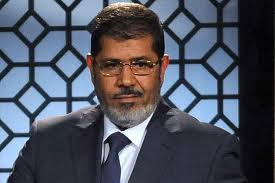
 On November 22, 2012 Egypt entered another phase of political instability when Mr. Morsi issued a declaration designed to protect the work of the Constituent Assembly drafting the new constitution from judicial interference. This declaration, in effect,  immuned Mr. Morsi's actions from any legal challenge. The sweeping declaration had other articles designed to appease the masses such as retrials of those accused of killings peaceful protestors during the Mubarak era. Such articles added no real legal value, as they required new evidence to be presented to justify these retrials. Peaceful protests erupted immediately in Egypt demanding withdrawal of the declaration and formation of a new Constituent Assembly that is balanced and representative of all Egyptians instead of the current assembly that is dominated by the Muslim Brotherhood and their Salafi and other Islamist supporters. The Muslim Brotherhood armed militias dealt with these protests utilizing brutal force killing 6 protestors and wounding hundreds. Two Muslim Brotherhood supporters were killed in the ensuing clashes.

The Obama administration, at this critical moment, faces a critical test regarding its true intentions for Egypt's fledgling democracy. It is becoming apparent that the Muslim Brotherhood and their president advocated democracy when they were out of power; once in power they became ruthless in suppressing the very same democracy that got them into power, not unlike what Mr. Obama predicted in his Cairo speech. So far the Egyptian people are getting mixed signals from Washington, on the one hand, the Obama administration stood by Morsi as a pay back to the ceasefire he helped broker between Israel and Hamas, on the other hand the Obama administration started slowly to pull away from the Egyptian regime hoping to nudge the Muslim Brotherhood into negotiating with their opposition.  

There are few questions upon us at this point. Could the Obama administration have predicted the outcome in Egypt as it is today?  Yes! The US administration knew well the nature of the Muslim Brotherhood as a supremacist organization which has been aiming to gain control over Egypt for over eighty years and would use all possible legal and illegal means to achieve its goal.  It is also apparent to a student of history such as Mr. Obama, that the Muslim Brotherhood will stop at nothing to spread its reach over the Arab and Muslim worlds to re-establish the lost Islamic Caliphate.

Could the Obama administration have changed the outcome in Egypt? No! The Obama administration did not have much choice in the outcome thus far.  The Muslim Brotherhood was the only organized group when the Mubarak regime fell in February 2011 and was the only force willing to provide concessions and guarantees to both the US government and the Egyptian military.  Also the Obama administration stayed away from changing the outcome because it did not wish to repeat the past mistakes as in Iran when the US supported the brutal Shah regime to the bitter end and gained an unrelenting enemy, and in Algeria when the US government supported an army overthrow over elected Islamists resulting in a bloody, decade long, civil war with an estimated 200,000 casualties.

Does the Obama administration know if the Muslim Brotherhood is bound to fail in running Egypt as a country? Yes! I need to give the Obama administration the benefit of the doubt in this and assume that the administration is fully aware of the limitations of the Muslim Brotherhood as an organization who operated underground for eighty years and recruited members, not based on talent or merit, but rather based on obedience to the internal hierarchy of the Brotherhood structure all the way to its supreme Guide Mr. Mohammed Badie and his more influential deputy Mr. Khairat El-Shater.  The Muslim Brotherhood organization has demonstrated thus far, its lack of vision, management and communication skills to solve Egypt's problems and will, likely, fail politically and economically. Currently, the Obama administration is attempting to change the outcome of  events by influencing the flow of aid and loans from the US, The European Union, the IMF and also from the rich Arab Gulf States and tying this flow of aid to ensure a more democratic transition. 

Even Qatar, a traditional supporter of Egypt's Muslim Brotherhood, contributed two Billion Dollars to the regime in the form of a certificate of deposit which can be withdrawn upon demand. The path to the Muslim Brotherhood demise is clear, however the price that the Egyptian people will pay will be very dear both in human and economic terms. The Brotherhood is  fighting a war of survival, they know well that if they lose this round, there would virtually be, no chance they will be able to recover because the Egyptian people will defeat their ideology. As for the Obama administration the fall of the Muslim Brotherhood will come at almost no cost and without US army involvement in the conflict. Obama also predicted the following in his speech when describing the path to democracy “There is no straight line to realize this promise”. Was he telling the Egyptian people your path from dictatorship to democracy is not straight and will unfortunately have a Muslim Brotherhood stop along the way? Only time and the Egyptian people will tell how this Obama experiment will end.


Michael Wahba
December 15, 2012

Sunday, November 18, 2012

They hate us!


They are horrible to us! they hate us so much, they don’t think of us as humans. It is so deep in them, this hatred; it is very naïve of us to think that we can be at peace with them, that one day we can have a normal relationship with them.

They kill our people indiscriminately, they don’t care if they are killing a young boy or girl, an old man or women, a mother, a disabled person, a pregnant woman

Their hate blinds them so much they just want to wipe us, all of us, out!

And just look at them ..whenever they had the chance to have power over us, they tormented us. They ethnically cleansed their lands of us, they disposed us ...humiliated us!

The only language they understand is power and force. We have to be careful not to get fooled thinking that we can ever have real peace with them, they want more, they want us out, all of us out. They can’t conceive any form of coexistence with us and we can’t coexist with them!


These are virtually the same sentiments, thoughts, words that I get from my friends and acquaintances across the political, religious and ethnic spectrum.

This is what I hear and read from most Jews and Israelis thinking of Palestinians, Arabs or Muslims and, not surprisingly, an identical, word for word, emotion for emotion to what I get from most Palestinians, Egyptians, Muslims, Arabs, etc.

Perhaps awareness of the mutuality of anxiety, anger, uncertainty, fear and sadness driven from these ideas and thoughts of the other, awareness of how identical they are, and the mirror image  on the other side can open some eyes, a small hope for peace in this large sadness of war, fear and hopelessness.

AA
November 18, 2012


Friday, October 12, 2012

Jehan Sadat - My Hope For Peace - Book Review


This new book by Jehan Sadat, widow of the late President Anwar Sadat of Egypt, reads like combination of timely essays and an autobiography that reads easily. The essays include impassioned well reasoned and referenced defense of Islam as a religion of peace and equality distancing Islam from violence and women subjugation. While Jehan Sadat religious belief of what Islam is, or rather her (our) versions of Islam are closely aligned, this part came across weaker than it could because of excessive generalizations. It is abundantly clear that a small majority or substantial minority of Egyptians doesn’t share Jehan Sadat or my versions of Islam.

Another essay like portion of the book covered Egyptian feminist movement and famous Egyptian feminists of the last one hundred years.  This was well researched and presented and only lacked those leftist feminists that suffered on the hands of Egyptian rulers. While she addressed the struggle for women suffrage, the omission of those who struggled for women suffrage in the early 1950’s and were subjected to regime hostility came across as an obvious omission. Similarly, while “we” may dislike and disapprove of Islamist ideology, leaving out Egyptian women leaders who advocated Islamist policies is another glaring shortcoming, in an otherwise good essay. Needless to say, such leftist and Islamist women suffered under both presidents Nasser and Sadat.

Separate from the essays, two central themes dominate the book, one is the history of President Sadat, including her life as a first lady, and another her life as a widow and an independent woman post his assassination.  Jehan Sadat aimed to portray her late husband actions in the best possible light and primarily as a man of peace, her defense of his actions was total. While this is understandable and perhaps it would be unthinkable for her to comment negatively on the rule of her beloved husband, this part came across somewhat weak. I found it difficult that Jehan Sadat did not recognize that her late husband presided over a totalitarian police state and that many people were imprisoned and tortured during his rule. Moreover, those were not only sectarian Islamists as she claimed but also many who opposed him including leftists, liberals and Coptic Christians. Indeed Sadat took a hostile position against Sana Hassan (author of Enemy in the Promised land) who strongly advocated for peace with Israel, Hassan was the wife of an Egyptian diplomat, Tahseen Bashir, who was pressured by Sadat to divorce her.

While it may help Jehan Sadat view of her husband to portray Sadat as a man of peace, who worked tirelessly for peace for decades, somehow I felt as an Egyptian American who lived the Sadat era, that Jehan Sadat wasted an opportunity at shedding more light on a man who, was clearly an Egyptian patriot, but was more about being practical and goal oriented than being a man of peace. Sadat moved quickly to achieve his goals and his actions could have been more objectively analyzed, while remaining sympathetic. Nonetheless Jehan Sadat had many fascinating tales of President Sadat.

The most enjoyable parts of the book and the parts that come across most honest and revealing are those about Jehan Sadat herself, a real pleasure to read. Jehan Sadat, did not put herself on a pedestal and tried to defend her actions, she rather allowed her fears, uncertainties, weaknesses to show. The tales of her move from Cairo to the US and her life in the US, including receiving her first pay check, her first bank account, her first time arranging her own accommodation in Washington DC are all fascinating to read. Jehan comes across a courageous and determined woman, with deep faith and lots of humanity.

While, the essay and the defensiveness of Anwar Sadat have some obvious weaknesses, this does not reduce from the overall value of My Hope For Peace. Jehan Sadat, is not only a fascinating woman, she clearly is a talented writer with a gift for easy prose that flows. I highly recommend the book and I very much hope, that Jehan Sadat would write again

AA
October 12, 2012

Sunday, September 23, 2012

On Blasphemy And Freedom!


Years ago, I watched “Life of Brian”, a Monty Python movie mocking Jesus Christ. I remember laughing in the movie theater along with a majority Christian audience in England. Over the years, as my Islamic faith deepened, I would no longer watch this movie let alone laugh at or own it, I find it objectionable for its portrayal of the Jesus like character.  As a Muslim I consider Jesus, like Mohammad, sacred, both are human beings chosen by God to be His prophets and messengers to all of humanity.

Commencing on September 11, 2012 we have seen days of angry protests and violence following the, peculiarly timed, airing of a video clip titled “Innocence of Muslims” by a Salafi TV station in Egypt. The violence was combined with demands by religious and political leaders in Egypt for action against the makers of the movie in the USA. The angry convulsions turned into loud demands for legal action and changes to international law to ban insults to religions and religious figures.

In an attempt to understand the so-called “Muslim rage”, I watched the “Innocence of Muslims” video on YouTube. Needless to say, I found it as offensive as any cheap insult or remark one receives from hateful or ignorant types. It did not mean a great deal to me that someone who hates Islam produces a movie that insults my Prophet in a vulgar manner. Mohammed, the Prophet of Islam, is sacred and beloved to me, I hold him in unparalleled esteem; but I also accept that some 80% of humanity do not believe in him, his message or believe in Islam.

To many Muslims, the word “prophet” carries huge religious meaning, a sacred or revered messenger from the almighty God. Many Muslims are unaware that, for most Christians, saying “we respect Jesus as prophet…” is sacrilege.  While the core beliefs in Christianity of the crucifixion and resurrection of Jesus and his divine status are not accepted by Islam, most Christians take “prophets” to mean wise men, inspired by God, but not divine!  So it can be clearly seen how religious beliefs, especially historical ones, are incompatible and how easily acceptance of one belief can be blasphemous of the other. In other words to deny the divinity of Jesus and simply label him a wise man maybe as offensive to a Christian as telling a Muslim Mohammad was a wise and good man but not a messenger of God. Belief in Islam by definition is blasphemy of Christianity and vice versa, the same applies to Judaism and other religious beliefs.

O mankind, indeed We have created you from male and female and made you peoples and tribes that you may know one another. Indeed, the most noble of you in the sight of Allah (God)  is the most righteous of you. Indeed, Allah (God) is Knowing and Acquainted.”  The Holly Quran 49:13

There shall be no compulsion in [acceptance of] the religion. The right course has become clear from the wrong. So whoever disbelieves in Taghut and believes in Allah (God) has grasped the most trustworthy handhold with no break in it. And Allah (God) is Hearing and Knowing.” The Holly Quran 2:256

The beauty of Islam, with its fundamental advocacy for equality, justice and freedom is virtually absent from the language of those who speak in its name calling for punishment of atheists and whose language focuses almost exclusively on the limitation of equality, limitation of freedoms and selective justice.

So, as I look at my personal belief in Islam and the recent Muslim rage events, I find myself reflecting on two very different but related questions: first is there a distinction between representation of religious figures, offensive or not, and incitement against the killing of fellow human beings of whatever faith? And a   second question: would a new international law banning blasphemy towards Jesus outlaw the teaching of Islam to our kids in the west? Answers to both questions are blatantly obvious: incitement to kill someone for their beliefs, no matter how distasteful to others, is wrong! And so would be banning the teaching or preaching of a religion because it disagrees with the basic tenants of another majority faith.

So while many call for change in international laws to punish those who publish material deemed offensive to religion, I find myself wondering how Islamic is it, to ban such material and punish its makers. Thus, I actually call for changing Egypt’s laws to allow such cheap rubbish as the Innocence of Muslims to be made in Egypt itself.  And for its makers to go about their sorry hateful lives in peace as long as they are are not inciting violence. Would such freedom hurt Egypt or Islam? Would Muslims anywhere rush away from Islam believing the trashy material shown on the video? Would Egyptians then not have the right to boycott people, businesses and TV channels that promote such insulting material?

Would a disgruntled unhappy Islam hater take advantage of this law then produce more hateful anti Islam material? Maybe, but let them! We each have our own narratives and our Islam becomes stronger not weaker with freedom!

Legalize offending religious beliefs for the sake of Islam, please!

AA
September 23, 2012

Friday, January 27, 2012

The Grey Zone


On this anniversary of the Holocaust remembrance, I recall a rather obscure, movie called The Grey Zone that I saw nearly ten years ago. The movie was based on the true story of an Hungarian doctor and on his life with the brigades of Jewish workers in Nazi concentration camps. Those Jewish slave workers cleaned the gas chambers and operated the cremation ovens. They were grey all over from the ashes, so hence The Grey Zone. Typically these workers were exterminated after few months, so for their effort they were given an extra three to four months of life and a modicum of concentration camp comforts such as better sleeping arrangements, more food and cigarettes.

While the much better known Stephen Spielberg’s Schindler'sList left me tearful, The Grey Zone left me in a state of deep and intense sadness; actually agony; but with remarkable clarity. The Grey Zone delivered all the shocking images that I could only guess at, but frankly dared not imagine. Here they were, right there before our eyes; hordes of people; entry into the gas chambers, the gas, the bodies piled up, the ovens, the ashes ...the whole thing. Not just the crowded trains, frightened faces and tired little hands clutching personal treasures , remnants of normal times, necklaces or photos of loved ones, but rather the full graphic details.

I am deeply saddened that that in my native Egypt, books of Holocaust deniers or those allocating much of the blame for the Holocaust to the Jews themselves, are increasingly widely accepted as the truth. It saddens me that movies like Schindler’s List have, to my knowledge, not been shown on Egyptian TV; while at the same time Egyptian State TV under Mubarak dictatorship serialized a drama based on the discredited Protocols of the Elders of Zion.

I am also saddened that most Egyptians today are unaware of the very honorable role Egypt played receiving boatfuls of Jews escaping from Nazi controlled Europe at a time when Jews were still being turned away from the United States. Sadly, to my knowledge the honorable contribution of Egypt saving Jews escaping Nazi receives no mention in Yad Vashem in Jerusalem either or in other places commemorating the Holocaust. So as we remember the Holocaust today, I want more people to remember Alexandria as a willing safe haven for Jews and to honor Egypt’s role.

The Grey Zone left me with heightened clarity on some fundamental ideas. Humans are capable of great horrors; normally decent human beings, in the face of mortal danger, will resort to unspeakable acts to save their own skin, even for a short while! …and hate survives on the fear of its would be victims and on the silence of those who witness it.

As we remember I hope we look deep inside and attempt to cleanse ourselves from hate, prejudice and fear!

AA
January 27, 2012

Friday, November 18, 2011

The "I'm not alone"s of Egypt

One day, perhaps ten or twenty years from now, sociologists, psychologists and other experts will look at the amazing developments unleashed in the Egyptian society following the January 25, 2011 Revolution. I will attempt to address a couple of observations, one perhaps over discussed right now and another less so.

First, the revolt against authority across society, in the home, at schools and universities, in work places; from factories to ports to hospitals, to courts and within security establishment itself, even within established political movements and religious institutions. Egypt has seen doctors and judges strike, central security conscripts strike and the established Muslim Brotherhood has seen several of its youth split out into new parties more closely aligned with other revolutionary youth movements. Egyptian families have seen their sons and daughters defy them to camp out for days at Tharir Square protests. 

For decades, and perhaps for centuries, Egyptian society has been patriarchal and hierarchical. Under the series of military rulers since the overthrow of King Farouk in 1952 the added element of corruption grew reaching nauseating levels under Mubarak. The excesses of authoritarian behavior and corruption permeated every aspect of the society from former president Mubarak and his family down to the tiniest organizational unit, be it a small school, factory, or government clinic.

The success of the revolution in gathering the support of millions and eventually the overthrow of Mubarak has opened the lid on explosive levels of frustrations and sense of deep injustice against unreasonableness and authoritarianism everywhere. Egyptians have become hard to contain anywhere, there have been problems and protests against Saudi authorities and airlines dealing with Egyptian pilgrims; Egyptians no longer put up with much in their usual silence and patience.

Second and perhaps less noticed phenomena is what I call "I'm not alone" syndrome! Before January 25, 2011 a swath of Egyptian society felt isolated and angry, against the society at large, not just the regime itself. I recall the words of an explosive 2008 rap, railing against the Government, “ded el hekomah” or ”ضد الحكومه” where Ramy Donjewan cries out against the Government and those who accept to be insulted, those who accept their dignity be trampled upon. The sense of anger was so pervasive, that the amazing outpouring of happiness and pride, in my view, was not just from the success of overthrow of Mubarak, but also from seeing how many like minded people were out there.

Unlike the revolt against authority " I'm not alone" is far from universality within Egypt. Many are fully occupied with daily struggles of life, feeding a family, making ends meet and rarely have time, energy or inclination to pay attention to other issues and there are those who are focused achieving own personal goals or being entertained without much interest in societal or intellectual pursuits. A clear majority of Egyptians clearly belong to those two categories. The first category struggles for survival is clearly the poor, the later is often described nowadays in Egypt as the The Couch Party or Hezb El Kanabah حزب الكنبه those happily sitting on their sofas watching the events.

I will carve out a further category of Egyptians , those active supporters of religious movements or associations be them Muslim Brothers, Salafis or Copts. These groups already knew they were not alone, even before January 25, 2011. Generally their primary identifications are with their groups as “brothers” true Muslims or “Copts” and less so with the society or Egypt as a whole.

With the above exclusions, I have indeed reduced those I wish to label by "I'm not alone" to fewer than 10% of the population. So a few million Egyptians who thought they were alone, or almost alone, have discovered like-minded thousands within their immediate districts, millions across the country. It was amazing to see, in Tahrir Square, few months after the revolution, over fifty thousand people cheering Ramy Essam, yell out ( madanniya madanniya ) or civil civil calling out for a secular democratic state. Ramy Essam, the young man from Mansoura, brought his guitar as his weapon against the brutality of Mubarak police and thugs during the days of revolution last winter and became known as the Singer of the Revolution.

It is this group of leftists, liberals and unaffiliated who care, really care that found its voice and knew it was not alone after the revolution. Many are pious Muslim or Copts, few are atheist, some are very political and have been for years. The “I’m not alone”s are far from uniform combining people with very differing views and some would even find more in common with Islamists than with each other. The liberals within the group are often more perfectly aligned with Muslim Brotherhood on economic matters, whereas the Egyptian Left would make common cause with the Brotherhood on hatred for Israel.

Yet it is this group, the "I'm not alone"s that are now the most reluctant to give up the joy they found in the revolution and have become the biggest critics of the Egyptian Army Generals who control the country. And it is indeed this group that has been suffering the brunt of the excessive suppression at the hands of the army. Revolution Singer Ramy Essam was tortured at the hands of the army several months ago and despite of promises of investigation and justice this remains to happen.

As I write these words, a couple of prominent “I’m not alone”s come to mind. From the pro west liberal camp Maikel Nabil remains on hunger strike for staggering 85 days, in army prison since March, currently awaiting retrial after an initial sentence of three year prison has been annulled by the military itself. Amazingly, he has not been released, even on bail, pending his retrial for his anti military blogpost. Maikel Nabil has been classified as Prisoner of Conscience by Amnesty International and so has Alaa Abdelfatteh who is more aligned with the Egyptian left wing. Alaa too is currently languishing in prison awaiting military trial. Maikel and Alaa have refused to cooperate with the military tribunal system and are being severely punished for their daring to challenge the military courts jurisdiction over them as civilians. It is amazing that the Army rulers have shown significant leniency towards Islamists and indeed some who were serving sentences for the murder of late President Sadat were freed or allowed to return from exile.

The "I'm not alone"s took their celebrations from cyberspace into the streets. So rather than just tweeting 140 characters in cyberspace, the very same Alaa Abdelfatteh pioneered the concept of Tweetnadwa where people stood up and expressed their views on selected topics in 140 seconds. So not only did Egyptians perfect the use of social networks for revolution, they did not stop and moved beyond converging the cyber and physical worlds.

The "I'm not alone"s have produced amazing creativity in street arts, songs, poetry and most recently nude photography. A young Egyptian girl published totally nude artistic photos of herself in defiance of conservative customs to the utter bewilderment and anger at some Salafi ultra orthodox Islamists who advocate covering not only women’s hair but also face and hands. I heard of the daring Allia el Mahdi and her blog on the very same day I heard of a Salafi leader refusing to be interviewed by TV journalist unless she covered herself; what a contrast between the two acts. Allia speaks openly of her atheism and of her boy friend Kareem Amer, who was jailed and tortured for his atheism and her rejection of forced religiosity. Alia and Kareem are certainly in a very tiny minority in conservative Egypt but they are not alone and they know it.

The amazing courage and perhaps naiveté of the young Egyptian "I'm not alone"s of various strips create conflicted feelings in me, I am so proud of them, of all of them, even the ones I disagree with, I am so hopeful for Egypt, because a country with such great human wealth, with so much youth talent and courage, truly, has amazing potential; but I am also so scared for them and desperately want them to be free, safe and happy!

AA
November 18, 2011